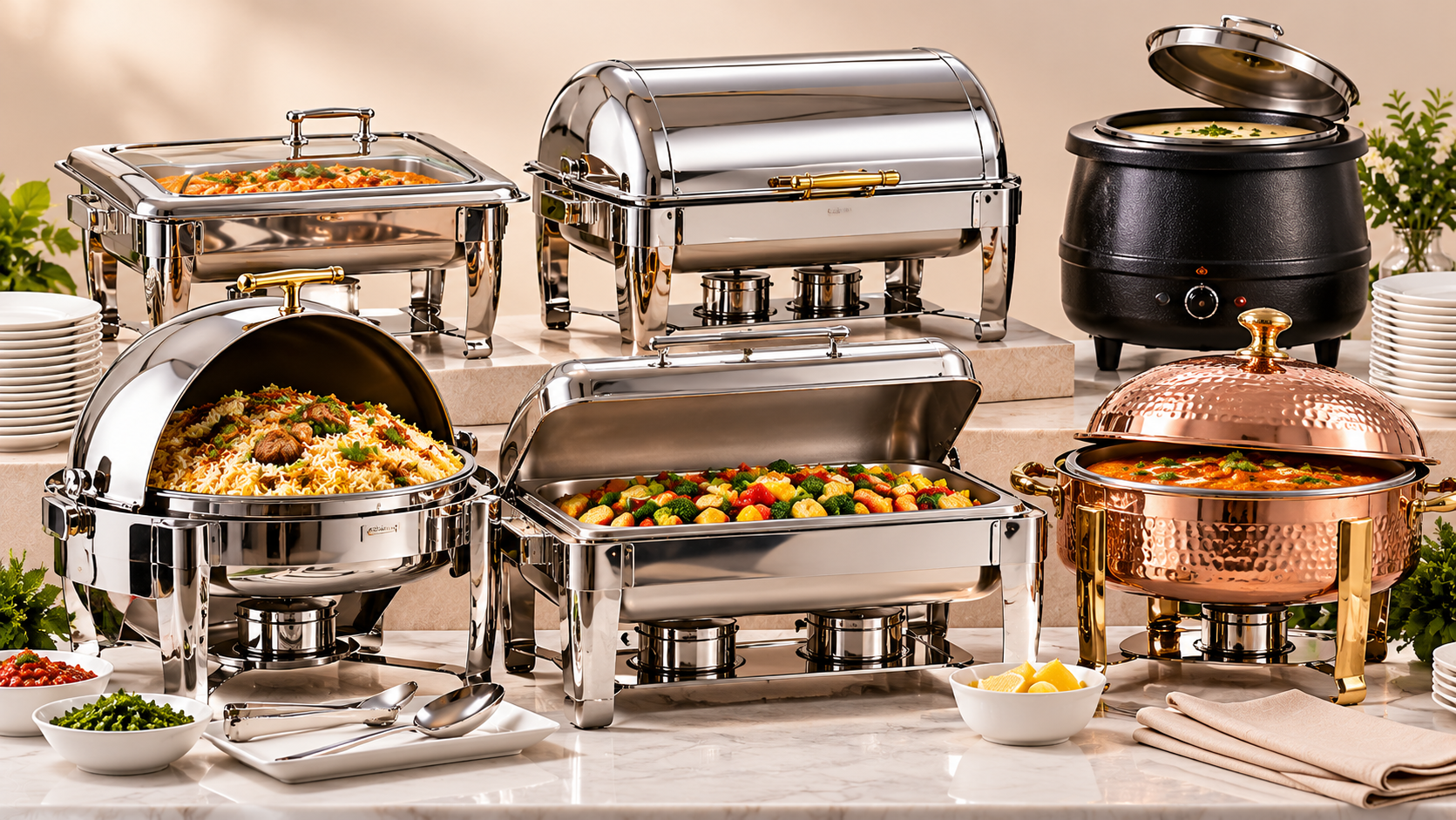
Most buffet problems trace back to one decision made without much thought: which chafing dish went under which dish. The types of chafing dishes on a line are not interchangeable, and putting a thin gravy in a deep rectangular pan or a biryani in a round one costs you heat, portions and presentation.
Used well, the types of chafing dishes are a presentation tool as much as a heating one. This guide breaks them down four ways — shape, lid, heat source and size — then matches them to what you are actually serving.
How a Chafing Dish Works
Before the types of chafing dishes themselves, the mechanism, because it explains every choice that follows.
A chafing dish is three parts. A water pan sits in the frame and holds hot water. A food pan sits in the water pan, so the food is heated by steam rather than by a direct flame. Underneath, a fuel holder takes gel canisters or an electric element.
The water is the whole point. It spreads heat evenly and caps the temperature, which is why a chafing dish holds food without cooking it further. Run one dry and the food pan is heated directly, which scorches the base within minutes. Every failure mode on a buffet line comes back to water level or fuel.
Chafing dishes hold food. They do not reheat it. Food goes in hot and stays hot — temperature control of held food falls under Dubai Municipality Food Safety Department requirements, so a chafer is never the place to bring cold food up to temperature.
Types of Chafing Dishes by Shape
Rectangular
The standard banquet workhorse and the most common of all types of chafing dishes you will see on a Dubai buffet line. Rectangular chafers take full-size food pans, hold the largest volume, and line up edge to edge along a trestle without wasting space.
Best for rice, biryani, grilled meats, roasted vegetables, pasta and anything served with a slice or a scoop. The flat profile makes it easy to portion neatly and to see how much is left.
Round
Round is the second of the three shape types of chafing dishes. Round chafers hold less but suit anything with a sauce. The curved base lets a ladle reach the bottom cleanly, so curries, gravies, stews and biryani-style dishes with liquid portion far better from a round pan than a rectangular one.
Round chafers also break up a long buffet visually. A line of twelve identical rectangles reads as institutional; alternating shapes gives the line rhythm.
Square
Less common, used mostly for presentation-led setups and smaller stations. Square chafers suit a compact line, a dessert station or a single-dish display where the look matters more than volume.
Types of Chafing Dishes by Lid
Of all the ways to split the types of chafing dishes, the lid is the most underrated, and on a long service it matters more than the shape.
Hinged roll-top. The lid rolls back into the frame and stays there. Staff never have to lift it, find somewhere to rest it, or put it back wrong. It holds temperature better because the dish is open for less time, and it is the right choice for long holds, outdoor lines and nightly service.
Lift-off. A separate lid that has to be removed and set down somewhere. Cheaper and perfectly adequate for short services, but on a two-hour buffet the lid usually ends up off entirely, and the food cools.
Glass or windowed lids. Let guests see the dish without opening it. Good for display-led setups, though they show condensation and need more wiping through service.
Types of Chafing Dishes by Heat Source
Gel fuel is the default for events. No power needed, so it works anywhere — gardens, marquees, desert setups, villas. The trade-off is that a canister burns for a limited window, and a chafer running on a spent canister is the single most common reason buffet food goes lukewarm. Count fuel per chafer per service and check canisters mid-event, not just at setup.
Electric chafers hold a steadier temperature over a long service and remove the fuel problem entirely, but they need a socket within reach. They suit indoor venues, hotel banquets and back-of-house holding far better than open-air sites. Where power is limited, keep electric units for back-of-house and run the guest-facing line on gel fuel. Our commercial kitchen equipment rental covers the powered holding units that sit behind the line.
Chafing Dish Sizes
All types of chafing dishes are sized around standard gastronorm food pans, which is what lets pans from different sources fit the same frames.
- Full size — one pan filling the frame. The default for a main dish everyone will take.
- Split or half size — two pans in one frame. Useful for serving two sides from a single chafer position, or for a dish and its accompaniment together.
- Deep vs shallow pans — deep pans hold more but the food at the bottom sits longest. For anything that suffers from sitting, a shallow pan refilled more often beats a deep pan filled once.
That last point is the one most often missed. Volume is not the only consideration — turnover is.
Specialist Types of Chafing Dishes
Two types of chafing dishes sit outside the standard range.
Soup stations. A deep round well with a ladle, built for soups, shorbas and anything served into a cup or bowl. Worth a dedicated position rather than squeezing soup into a standard round chafer.
Large-format and display units. For an ouzi, a whole lamb or a carved centrepiece, standard chafers are the wrong tool. These need a large display unit sized for the piece, usually sited at the head of the line where it works as the visual anchor.
Our chafing dish rental range covers rectangular, round, soup and large-format formats for Dubai banquet service.
Matching Types of Chafing Dishes to Your Menu
| Dish | Best chafer type | Why |
|---|---|---|
| Rice, biryani | Rectangular, full size, deep | Volume and clean scooping |
| Curry, gravy, stew | Round | Ladle reaches the base cleanly |
| Grilled or roast meats | Rectangular, shallow | Easy to portion, less time sitting |
| Vegetables, sides | Split or half size | Two sides from one position |
| Soup, shorba | Soup station | Depth and a proper ladle |
| Pasta | Rectangular, shallow | Dries out in a deep pan |
| Ouzi, whole lamb | Large-format display unit | Standard chafers are undersized |
How Many Chafing Dishes Do You Need?
Whichever types of chafing dishes you choose, count by menu item rather than by guest. Work from one chafing dish per hot menu item per 80 to 100 guests, then duplicate the full set on a second mirrored line past roughly 150 guests — above that point the queue, not the food, is the bottleneck.
Adjust upward for high-uptake items like rice, and downward for sides. For the full picture across tableware, furniture and linen as well, see our guide to how much catering equipment you need per guest.
Five Mistakes That Cost You Heat
These apply across all types of chafing dishes, whatever shape or fuel you are running:
- Running the water pan dry. Check levels at the same time you check fuel.
- Not counting fuel per service. One canister per chafer is a setup figure, not a service figure.
- Deep pans for delicate food. Shallow and refilled beats deep and sitting.
- Lift-off lids on a long buffet. They come off and never go back.
- Loading a chafer with food that is not already hot. It holds; it does not reheat.
The rest of the line matters too — serving utensils, risers and buffet tags come from our buffet accessories range, and the trestles and skirting from tables and chairs and table covers.
Choosing the Right Chafing Dishes for Your Event
The fastest way to get the types of chafing dishes right is to work from the menu you are serving rather than a generic count. Send us your menu, guest numbers and venue type and we will match chafer types and quantities to what you are actually serving.
See the chafing dish range or request a quote with your date and we will confirm availability.
Frequently Asked Questions
What are the main types of chafing dishes?
The types of chafing dishes split four ways: rectangular, round and square by shape; hinged roll-top, lift-off and glass by lid; gel fuel and electric by heat source. On top of those there are specialist units — soup stations and large-format display chafers for ouzi or a whole lamb. Most banquet lines use rectangular and round together.
What is the difference between a round and a rectangular chafing dish?
Rectangular chafers hold more and suit anything scooped or sliced — rice, biryani, grilled meats, pasta. Round chafers hold less but their curved base lets a ladle reach the bottom cleanly, which makes them the better choice for curries, gravies and stews.
Is a roll-top chafing dish worth it?
For any service longer than about an hour, yes. The lid rolls into the frame and stays there, so staff never have to lift it or find somewhere to rest it. The dish is open for less time and holds temperature noticeably better. For a short service, a lift-off lid is adequate.
Should I use electric or gel fuel chafing dishes?
Of the two heated types of chafing dishes, gel fuel works anywhere and needs no power, which makes it the default for gardens, marquees and villa events. Electric holds a steadier temperature over long services but needs a socket within reach, so it suits indoor venues and back-of-house holding. Where power is limited, keep electric units behind the line.
How many chafing dishes do I need for 100 guests?
Roughly one per hot menu item. A six-dish menu for 100 guests needs about six chafers on a single line. Past 150 guests, duplicate the whole set on a second mirrored line rather than adding food to one line, because the queue becomes the constraint.
Why does food go cold in a chafing dish?
Almost always fuel or water. A spent gel canister stops producing heat long before anyone notices, and a dry water pan heats the food pan directly instead of gently. Check both mid-service, not only at setup.
Can I reheat food in a chafing dish?
No. A chafing dish holds food at temperature; it does not bring it up to temperature. Food must go in already hot, from the kitchen or from proper holding equipment. Using a chafer to reheat is both slow and a food safety risk.
What size chafing dish should I order?
Full size for a main dish everyone will take, split or half size for two sides from one position. Choose depth by how the dish behaves rather than by volume alone — for anything that suffers from sitting, a shallow pan refilled more often beats a deep pan filled once. Contact us with your menu and we will match sizes to it.